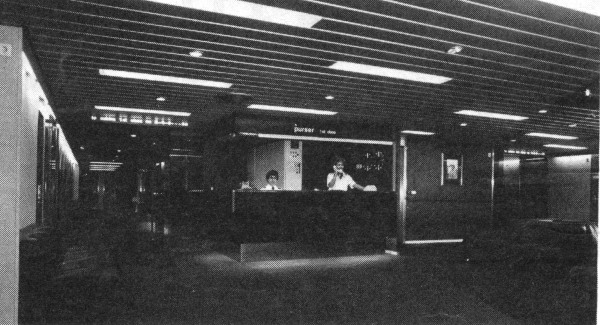
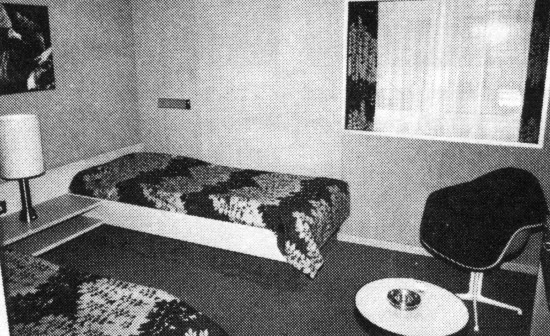
After a locating our cabin and having a quick look around, a stop at reception was needed to pick up some towels: here an explanatory sign could be found explaining that due to the high volume of thefts, passengers would have to leave a 20 Euro deposit or an item of ID. A Moroccan family in front of us duly parted with their cash. As Westerners, evidently these rules did not apply, and we were handed a pile of crisp clean towels with no questions asked and no deposit left.
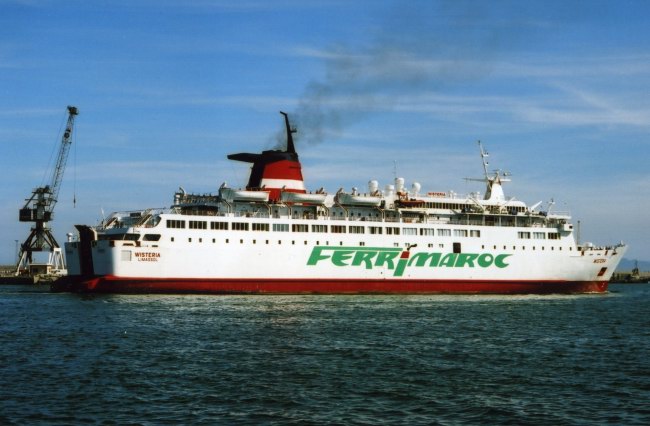
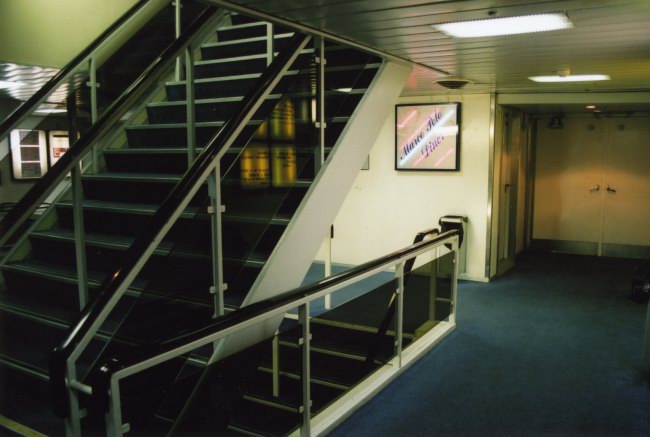
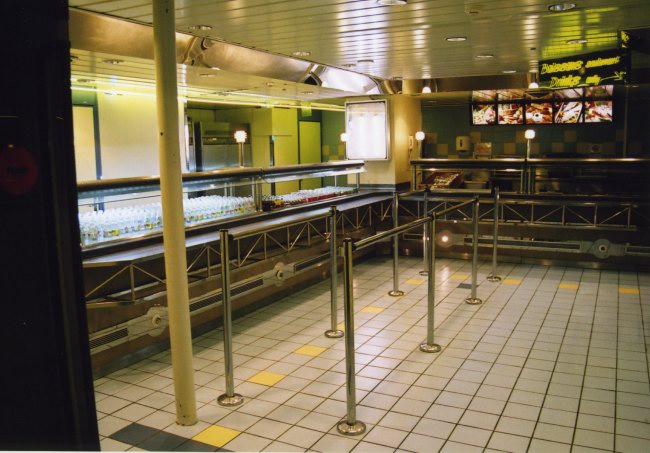
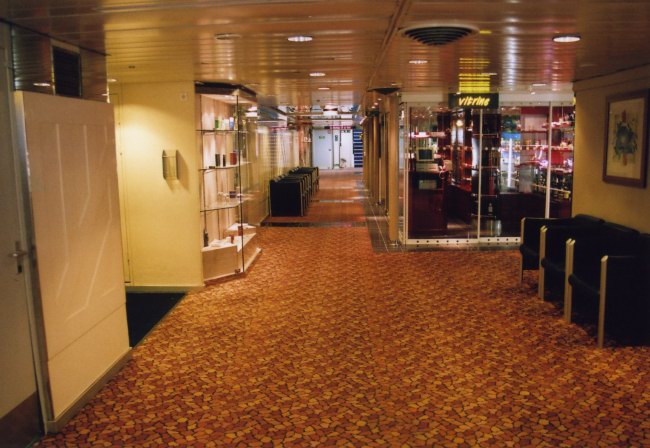
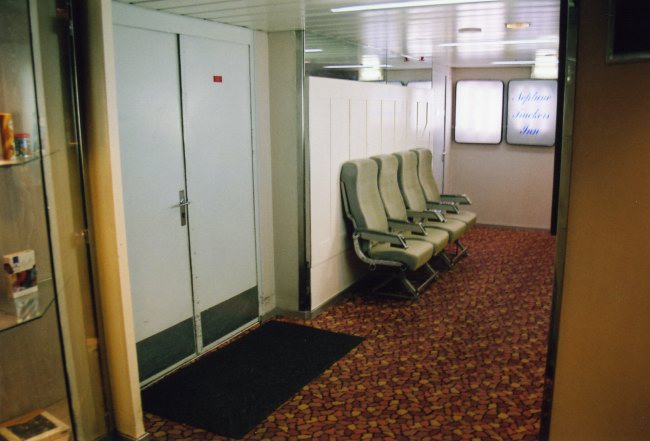
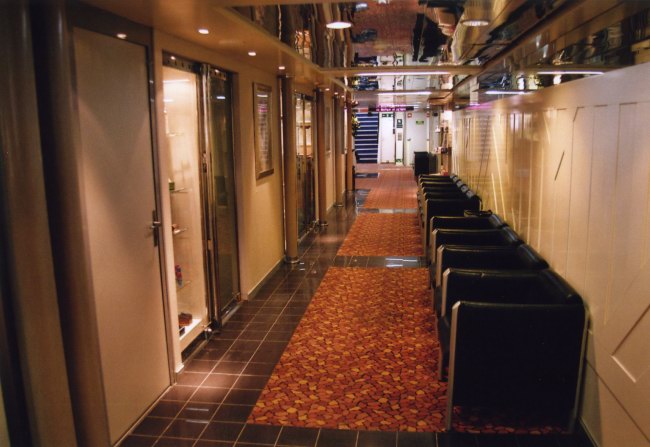
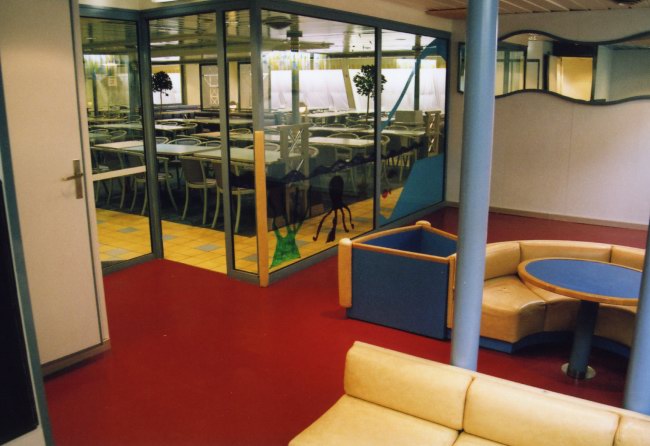
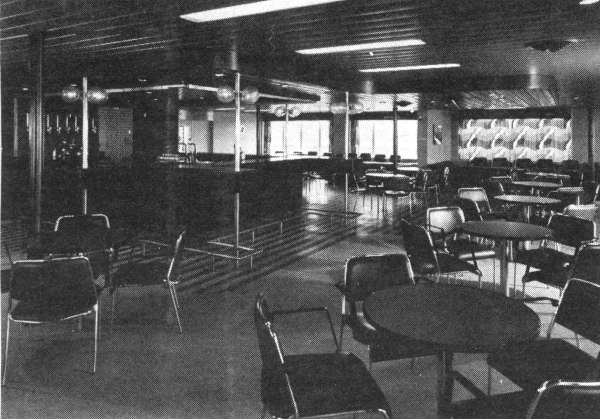
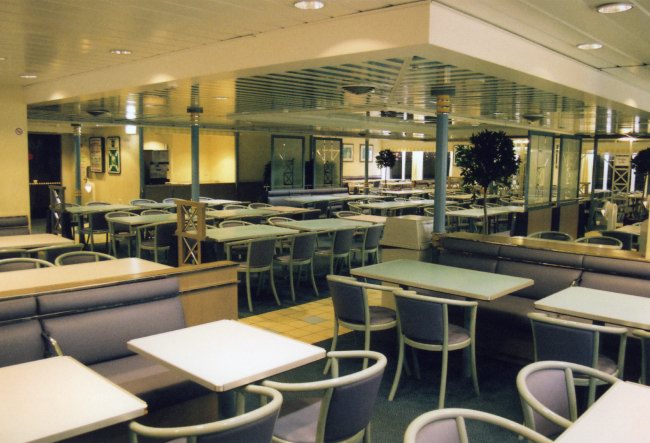
Onboard, the Wisteria is still very much the Duc de Normandie – with one significant difference. Her old restaurant (the Honfleur Restaurant in the Brittany Ferries days, and before that the stylish original first class restaurant) has been converted into a reclining seat lounge. In the manner of the great ferry conversions, the buffet servery has been left in place with seats all around. And when the brochure says “airline seats”, for once the description is entirely accurate, as evidently TEF have acquired en masse a batch of ex-Lufthansa seating, complete in places with that company’s logo and all with the little panel of buttons enabling one to control headset volume, change channel or call a stewardess. Doubtless many passengers have tried and failed to get one of Ferrimaroc’s attractive Spanish hostesses to attend to them; alas the buttons are inevitably disconnected and useless in their new role. This change in use of the restaurant has removed one of the ship’s peculiarities: in a hang-over from her two-class North Sea days, it had marked the dividing line between second class (forward) and first class (aft); when purchased by Brittany Ferries and converted into a one-class vessel, the dividing bulkheads in the main lobby on the deck below were removed, but the restaurant remained in place. Thus it remained as a strict division between fore and aft with passengers having to go down to Deck 5 to transit between the self-service forward (the former second class cafeteria and bar/lounge) and the main L’Alambic bar, once the first class lounge. On the Wisteria however, the new reclining seat lounge acts as a connecting alleyway and the doors at either end allow free movement through the ship.
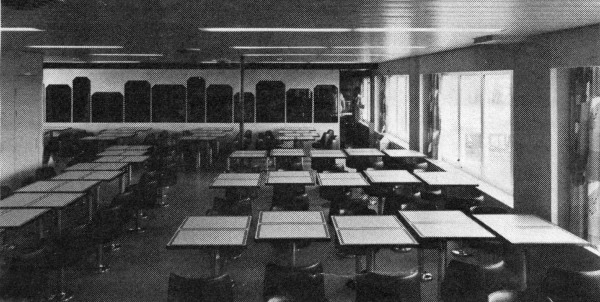
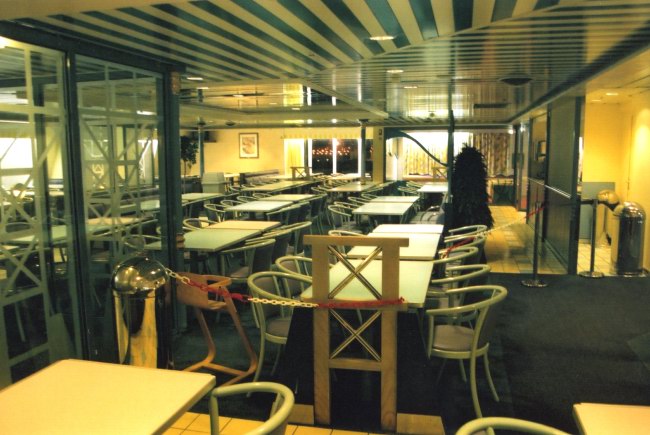
Although she is otherwise mostly unchanged from her English Channel days, the Wisteria has very much become a Trans Europa ship in branding, with that company’s name and logo largely (but not comprehensively) replacing the BF equivalents. The forward cafeteria (l’Estacade) has become the Marco Polo Diner in line with the Ramsgate vessels and posters of Oostende can be found hanging in various places around the ship. In line with local requirements, a small mosque has been created in the former video games area on the starboard side just forward of the bar, but this appeared little used with passengers preferring to pray in alleyways and other quiet corners. [Report continues on next page] |