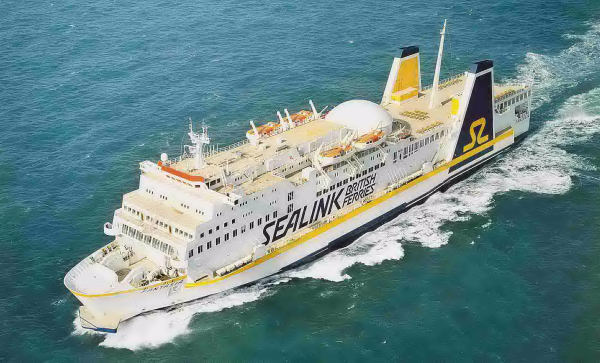
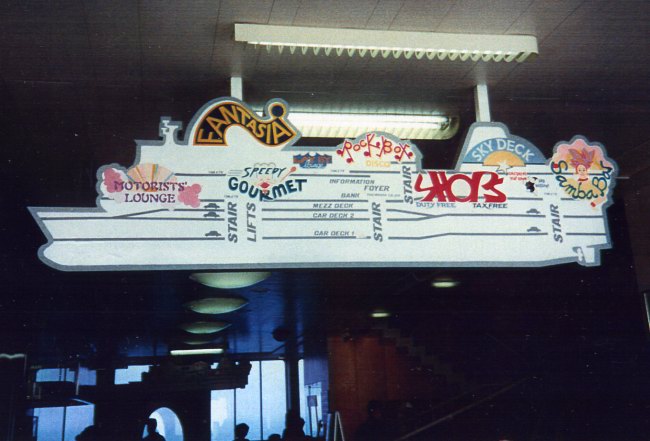
Fantasia and Fiesta were landmark ships - the thought, logic and integrity of the original design, the unique shapes and layout of the interior spaces, the attention to practical detail all combined with an exterior design which simply screamed "look at me", was something that made these new ships stand out from the crowd. Alas, the original interiors proved rather impractical in a number of key respects and it was perhaps essential to experience the ships in their first two seasons to capture them as they had been envisaged. The vast swathes of purpose-made pastle carpets, the light coloured but easily-marked furniture and the sand-coloured outside decking all proved to have only a short shelf life. Inevitably, changes were made, but it was in many ways unfortunate that these vessels were to serve through the most radical upheavals seen in the UK ferry industry. The ships, especially Fantasia, were therefore refitted, adjusted and rebranded so often that in her case pretty much all that remained by the end was the shell of the conversion and the shape of the lounges.
Those who would later criticise the sisters must bear in mind the impact they made when they entered service and the new features they introduced to cross-channel ferry travel: twin-level lounges, skylit bars, the huge main lobby with grand staircase. In appraising these ships it must surely be recognised that attempting to advance ferry design with several radical innovations was a more worthwhile thing to do than to not even try at all. At the core of the Fantasia and Fiesta's early success lay the unique design - the ships dared to be different to what had gone before and were all the more popular with passengers for it.
Fantasia's significance though perhaps has another side. More than just being "different" and "eye-catching" to her passengers, she represented something much less tangible. To experience the new flagship, to be excited by the colourful interiors, to enjoy the Fantasia as a trend-setter was also in many ways to take a stake in Sealink British Ferries themselves and to genuinely believe in their future. This ship was the embodiment of the aspirations of all who cared about the former railway fleet - the owners, the staff and even those passengers who took an interest. I believe Fantasia was the last great British Sealink ship, unique in being the only international vessel to receive a complete Sea Containers interior, from scratch. The continuing decline and then miserable death of the Sealink name in the Stena years to a great degree betrayed the hopes of all those who had believed in the company back in 1990 when its new ship had entered service. At that time, it just didn't seem like one final hurrah; but so it turned out to be - of all the ships in the world, a converted Bulgarian deep-sea ro-ro freighter by the name of Fantasia became the final Sealink flagship, ultimate successor to all the British railway ships of the past century and more.
She was, and is, a worthy ship to have taken the honour. |