P&O's statement of intent in the early 1990s for their key freight route from Dover-Zeebrugge was to place an order with Schichau Seebeckwerft in Bremerhaven for a pair of what were at the time described as 'Super Freighters'. The order was later doubled, and with the investment being valued in the region of £200m, this was a clear expression of confidence in the cross-channel freight trade at a time when the Channel Tunnel was looming and operators were readying all aspects of their businesses for the intense competition that it would bring.
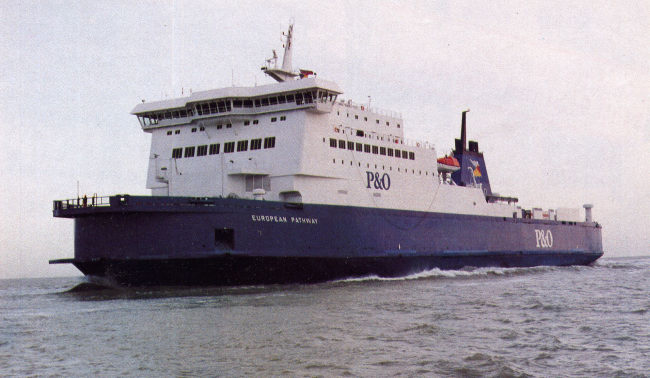
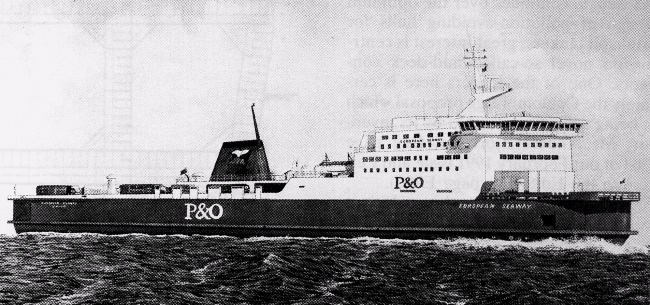
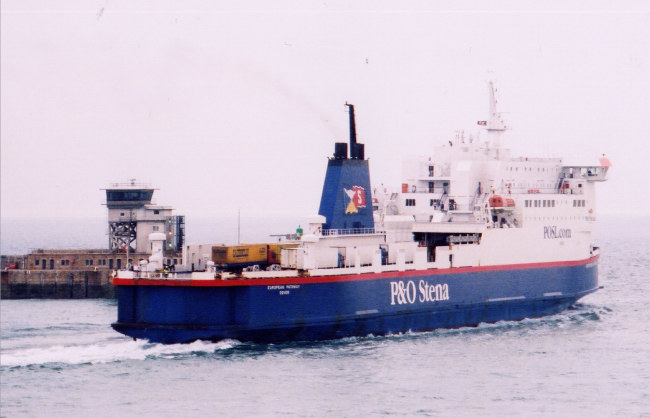
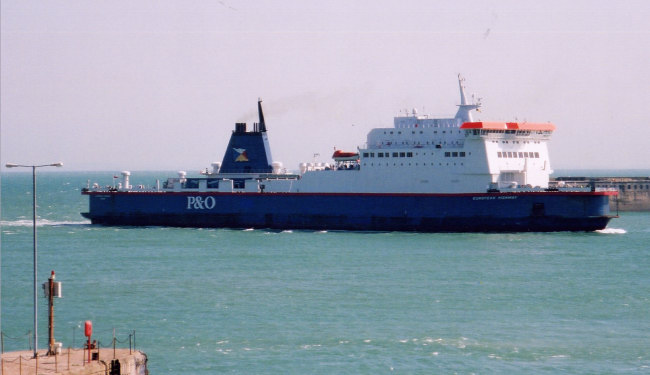
In the event, the fourth of the class, due to have been named European Causeway, was ultimately completed as Pride of Burgundy with passenger accommodation added to cater for growth on the core Dover-Calais run. The first three however entered service in their originally conceived design as European Seaway (October 1991), European Pathway (January 1992) and European Highway (May 1992). In this guise they replaced not only the original, much smaller, European class of the late1970s but also saw off the two remaining passenger ferries, the Zeebrugge passenger service being terminated.
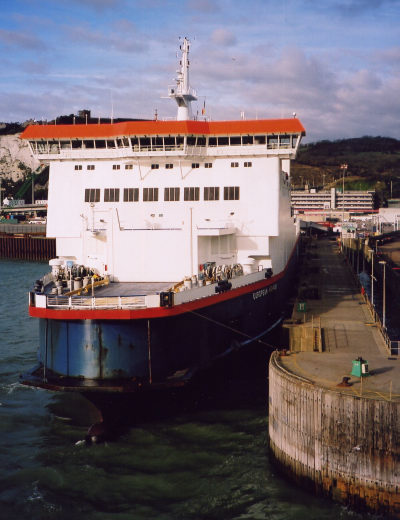
As built, all accommodation was situated on the four upper decks at the forward part of the ships, above the twin, full-height drive-through freight decks. With space for 200 drivers, the ships were credited with significantly raising the standard for freight ferries on the English Channel, featuring spacious lounge areas and comfortable cabins. The basic design was drawn up by naval architects Knud E Hansen and was in several ways similar to the 1988-built Robin Hood and Nils Dacke of TT Line, from the same yard.
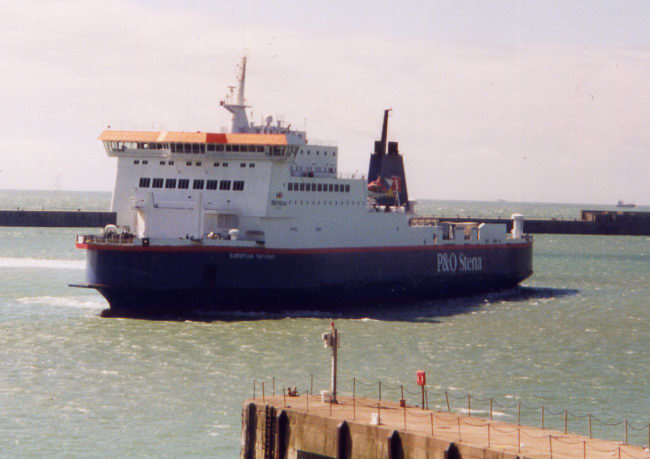
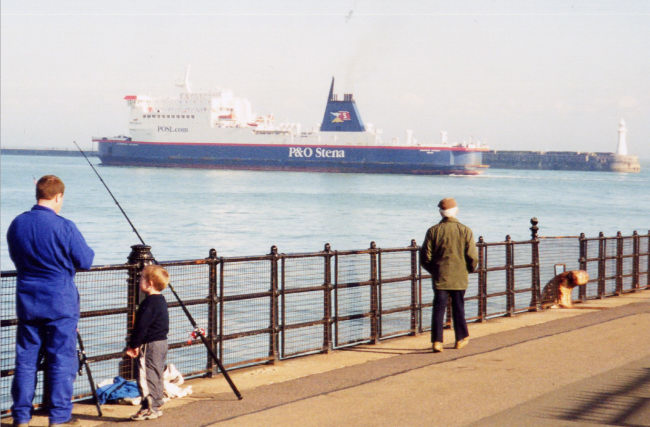
Operations of the three sisters continued through the 1990s, regardless of the 1998 merger with Stena Line after which the ships gained the red cheatline and the P&O Stena twin houseflag logo. The European Seaway later predominantly served Calais as Zeebrugge services were cut back in favour of the shorter link. |